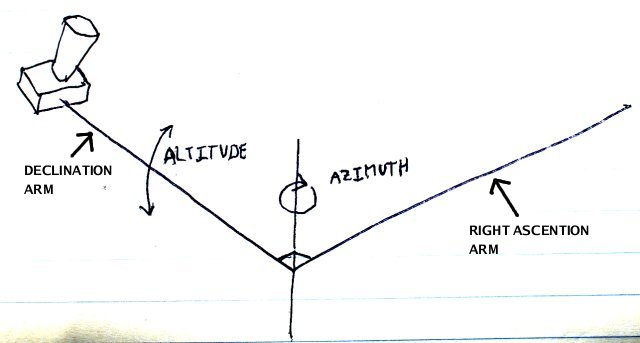


The 3 parameters which must be aligned are altitude, azimuth, and
tracking speed. They are all relative to the declination arm.
Everything else hangs off the declination arm.
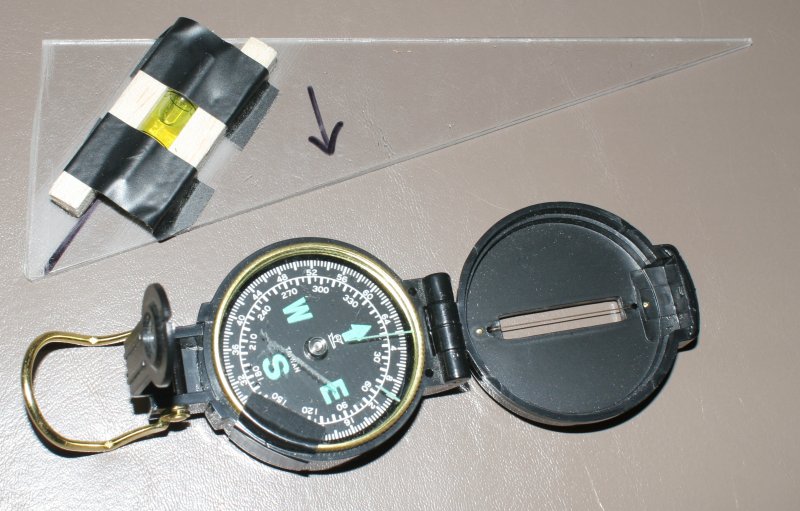
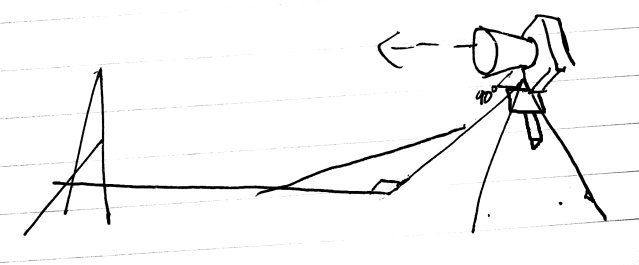
When the trapezoid is first assembled, we use a lensatic compass and
angle tool to roughly set the azimuth and altitude of the declination
arm. When resting on the declination arm, the angle tool is calibrated
to show level when it's 37°. The lensatic compass needs to show 60
mils. This is the axis of the Earth's rotation relative to the dumpy
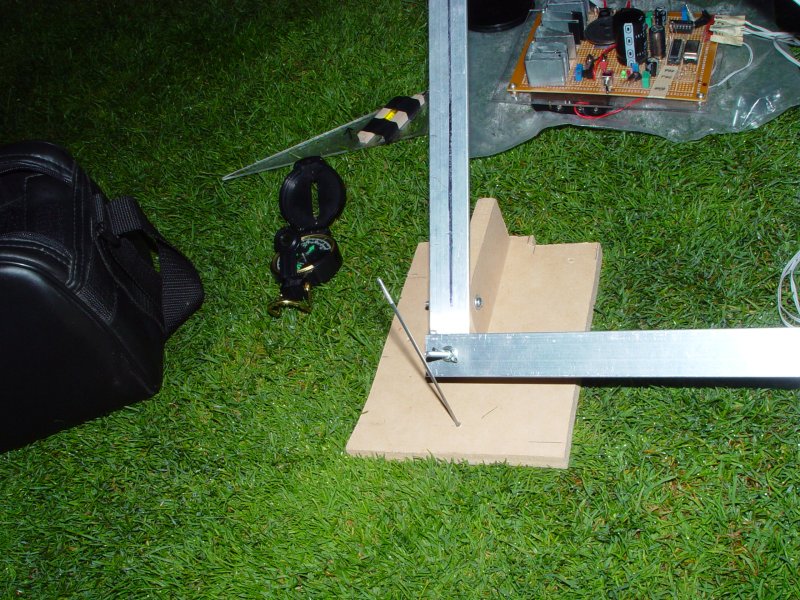
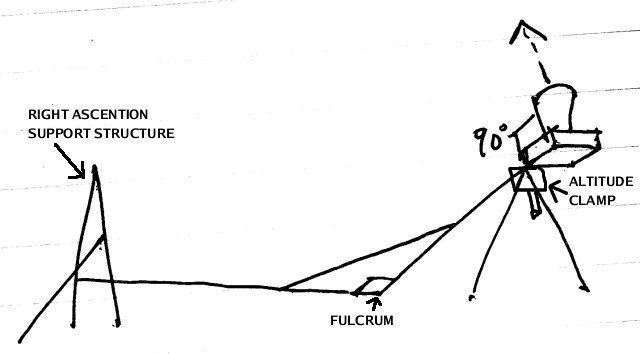
apartment. Then the right ascention support is aligned to be exactly
vertical and span no fishing line when the right ascention arm is
completely deflected.
The fulcrum is always pinned down to simplify the alignment.
Next comes azimuth adjustment. Refining the azimuth requires pointing
the camera straight up and at a star on the equator.
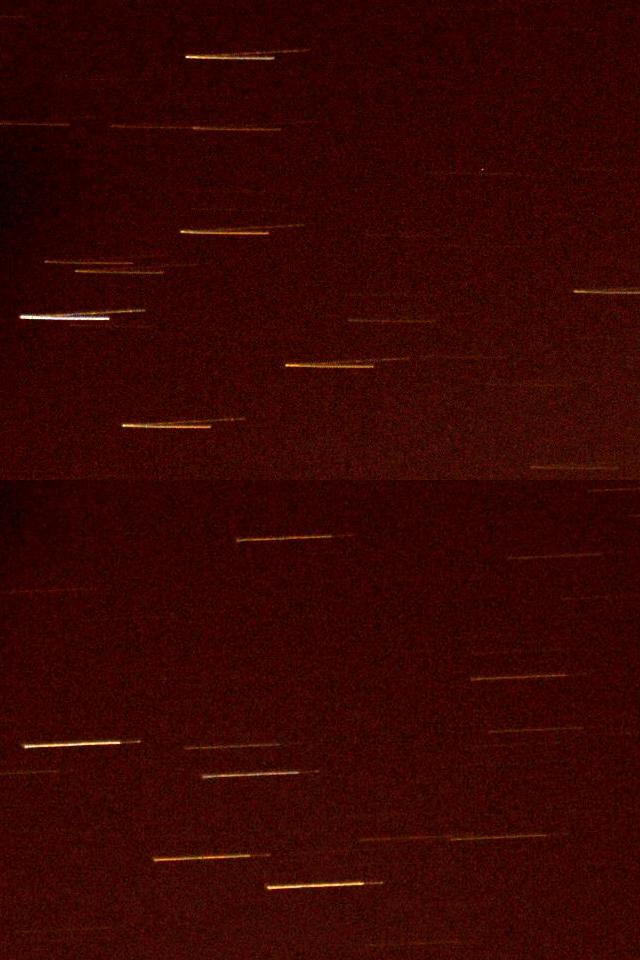
Take a 60 sec, ISO 400, F2.8 exposure. Advance the right ascention at
full speed for the first 15 seconds and leave stationary for the next
45 seconds. An unaligned trapezoidian produces V trails while an
aligned trapezoidian produces single lines. The faint trail was
created by the 15 sec movement. The bright trail was created by the 45
second movement.
Rotate the azimuth to get the star trails parallel. In the previous
image, the trapezoid had to be rotated clockwise relative to the
direction of the lens to get the bright trails to rotate
counterclockwise.
Changing azimuth involves moving the right ascention support out of the
way, moving the camera a few inches left or right around the fulcrum,
and realigning the right ascention support and realigning the
declination. It's not the funnest procedure but it beats arguing with
tile repair managers at NASA. Normally a few pixels of azimuth error
requires 2" of camera movement.
Next comes altitude adjustment. Refining the altitude requires
pointing the camera east and at a star on the equator.
Use the same exposure technique from the azimuth alignment here.
Rotate the altitude to get the star trails parallel.
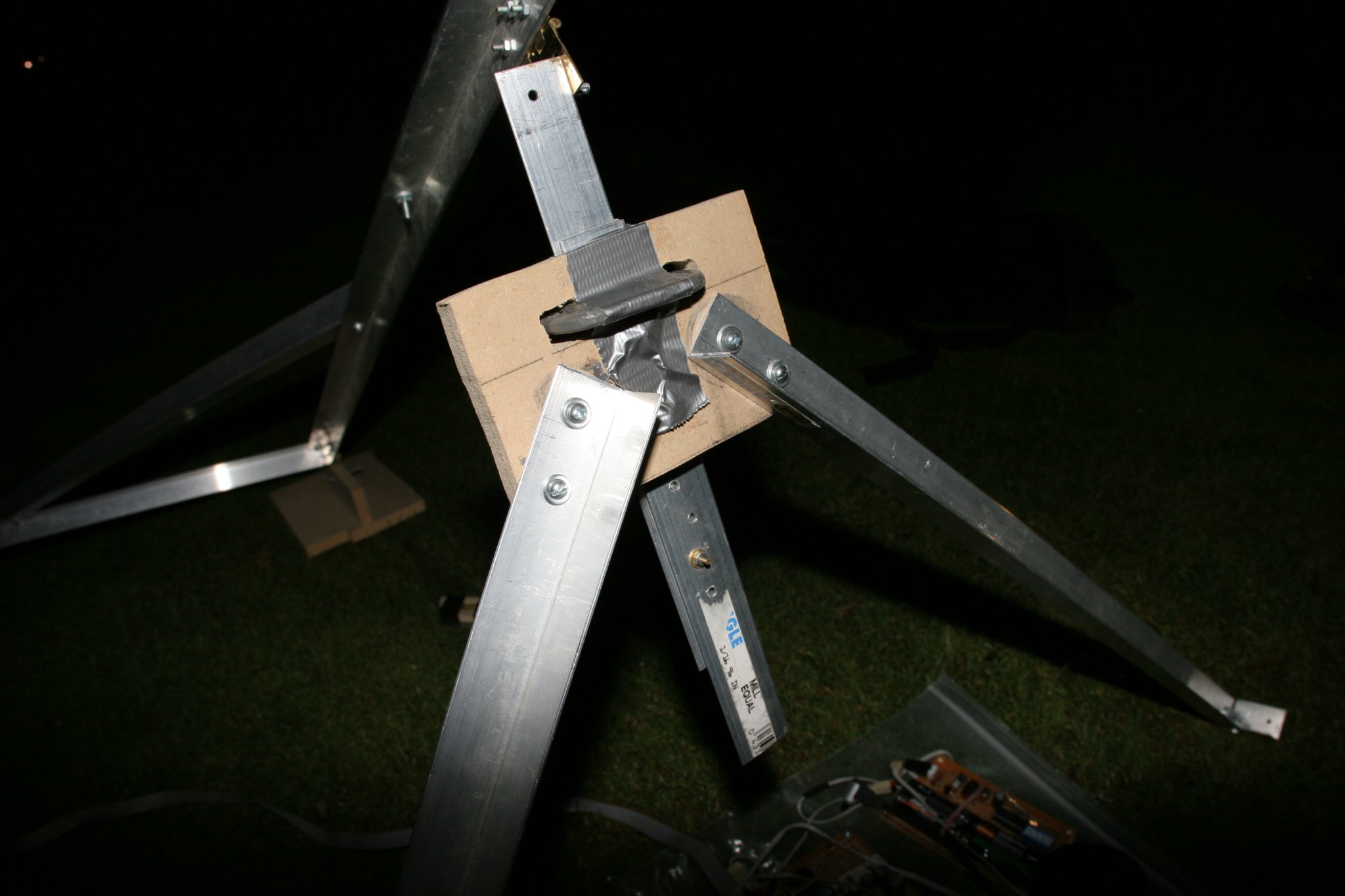
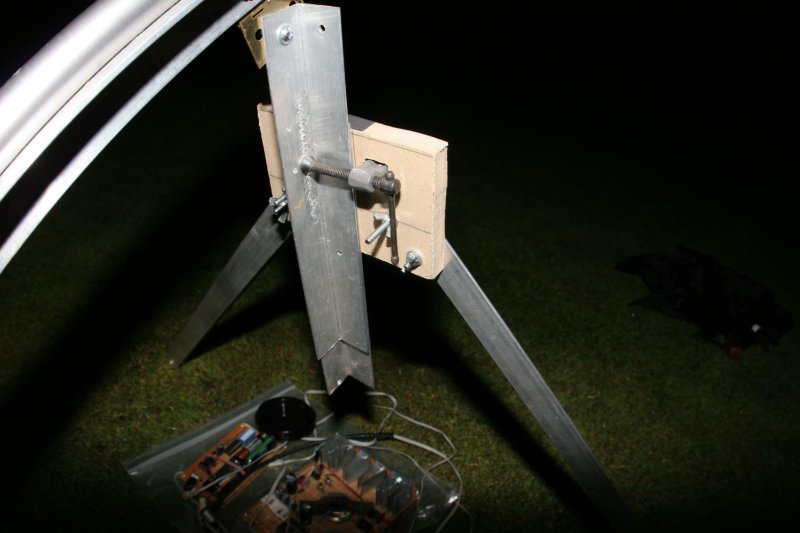
The altitude mount was very hard to design but we think we have
something which is pretty stable. Changing altitude requires loosening
the altitude clamp, sliding the camera up and down, and tightening it.
Then adjust the right ascention support to allow movement in the new
altitude. A few pixels of altitude error requires 1/4" of camera
movement.
Now locate any subject for the tracking adjustment. Take 2 * 30 second
exposures with tracking. Adjust the tracking speed until the two
exposures are as close as possible, bearing in mind the mirror flapping
causes additional shift between exposures. Then align with 2 * 120
second exposures to get the finest adjustment.
Rewind the trapezoid and test tracking speed again. It seems to be
unstable.